Quote:
Originally Posted by fielderLS3

The list of things I gave that China is doing are not "mythical threats." They are all things China is actually doing. How can you possibly expect to have a healthy economy without the enforcement of copyright and patent law? Why produce anything if you have no ability to keep the fruit of your labor?
Again, how can having our goods counterfeited, and our intellectual property rights stolen possibly be beneficial to us? The last time I checked, when someone steals something from you, you are the one who loses.
|
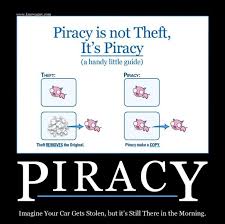
What I meant by "mythical threats" is simply they are not actual threats; it's not a threat to trade with anyone. How can I expect it? See the fashion industry; a multibillion dollar industry that thrives without any patent or copyright laws. Of course, "the fruit of your labor" argument is one that is ignored quite often due to the arbitrary selection of which company receives these forms of protection from competition. Does the creator of the first car or t-shirt not deserve a patent for his discovery? Does he/she not deserve the to reap the "fruits of his labor?" "Intellectual property" is not property at all. The only reason why property is assigned to goods is the fact that nearly all goods are scarce and some type of system needs to solve the conflict that would inevitably arise from two people trying to, for example, eat the same orange; property is such a system. Consequently, a good, such as ideas, that is not scarce does not fit the criteria of being property. In other words, ideas are infinitely reproducible, therefore they can not be labeled property.
I would hardly call this theft.
Quote:
|
The US has a huge net trade deficit with the world.
|
China has a trade deficit with most other countries also. This is true of the United States as well, but it ironically does not lead the reduction of economic growth you want it to. In fact,
our balance of trade says;

Quote:
|
The graph indicates that, as Frédéric Bastiat predicted, the deficit slackened during recessions and grew during periods of expansion. Also of note, many economists calculate trade deficits and/or current account deficits as a percentage of GDP. The US last had a trade surplus in 1975.[42] Every year there has been a major reduction in economic growth, it is followed by a reduction in the US trade deficit.[37]
|
Quote:
|
And for every dollar that comes back in that manner, we owe a dollar plus compounding interest. When the dollars come back as debt, it is a negative, not a positive. Sure, it feels good for a while, but this is in no way sustainable.
|
The issue you talk about here is uncontrolled credit expansion and fixed exchange rates that are currently under the control of
not the market but government. Of course it's not sustainable; yet, you can thank your federal reserve and the ones who believe government can efficiently allocate resources.
Quote:
|
Eventually, the creditor has to be paid. When that day comes, it is not going to be pretty. This is not how economies grow, this is how nations lose their sovereignty. We all saw what happened when houses became worth less than the mortgage. What do you think is going to happen when our debts exceed our GDP?
|
I'm sorry, but this viewpoint is not one that fits with your previous assertions. If you're hoping that our nation having a trade deficit is why China is needed to buy government bonds, then I'm sorry to disappoint you.
Quote:
|
Originally Posted by Antony Mueller
The U.S. trade deficit is an American problem. It is the result of insufficient savings at home and a widening budget deficit. With the pool of available external savings shrinking, the United States will be confronted with the task of generating sufficient savings at home. This requires a reduction of private consumption and will put a hard pressure on governmental expenditures.
|
I have a good feeling what will happen when our debts exceed our GDP; it is likely our government will default on their debts. This can be avoided, but it's going to take drastic cuts in spending if you do not want to raise taxes.